By Keith Phaneuf on Apr 20, 2021 06:31 pm
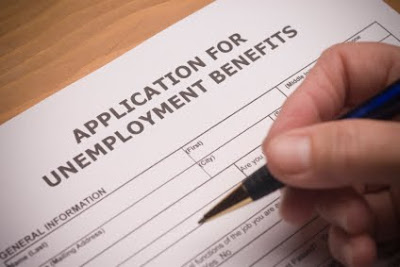 Gov. Ned Lamont on Tuesday announced a deal to boost the state’s unemployment fund. Gov. Ned Lamont unveiled a plan Tuesday that would preserve Connecticut's debt-riddled unemployment trust fund by curbing benefits for workers and asking more from the business community as a whole. But the deal, which was endorsed by both major business and labor coalitions, actually would reduce unemployment taxes starting in 2024 on about three-quarters of all businesses. Those that lay off high numbers of workers, though, would pay more. "A robust, sustainably funded unemployment insurance system is Connecticut's most important tool for keeping our families out of poverty and our economy in motion during a recession," said Lamont, who announced the deal during a late-afternoon press conference outside of state Department of Labor offices in Wethersfield. "I appreciate legislators and stakeholders working together to develop a common path forward on this critical issue." Connecticut, like nearly all states, has run up hundreds of millions of dollars in debt to maintain unemployment benefits since the pandemic began in early March 2020. The state has borrowed roughly $700 million from the federal unemployment trust to date, and the projections hold that Connecticut's debt may exceed $1 billion before the majority of its population has been vaccinated. The state was paying weekly benefits to more than 390,000 filers during the worst of the pandemic last spring, and the weekly caseload still tops 190,000. By comparison, Connecticut lost about 120,000 jobs during the last recession, which stretched from December 2007 through mid-2009. To whittle down more than $100 million per year off that debt, according to state officials, the state will take several steps starting in 2024. Full details of the plan, which needs legislative approval and will go before the Finance, Revenue and Bonding Committee later this week, were not available late Tuesday. But the measure contains three major cost-cutting measures that limit future benefits for the unemployed: The minimum annual earnings required to qualify for unemployment would rise from $600 to $1,600, and then the number would increase annually according to the rate of inflation. Connecticut hasn't raised the threshold since 1968. The deal also suspends four annual $18 increases in the maximum weekly state unemployment benefit beginning in 2024. And workers no longer could tap unemployment benefits until they exhaust any severance pay. The compromise deal, which was endorsed by House leaders on the finance committee, Reps. Sean Scanlon, D-Guilford and Holly Cheeseman, R-East Lyme, also asks more from businesses, which pay the unemployment tax that fuels the state trust. Businesses currently are taxed on the first $15,000 they pay their employees. That base would rise in three years to $25,000. A second change would expand the maximum experience rate — a component of the unemployment tax that penalizes companies more heavily as they lay off more workers. To mitigate those rate hikes, though, state officials lowered other elements of the tax, including the minimum experience rate and a special "solvency" rate imposed on all businesses to keep the fund afloat. The net result of these changes, according to Lamont's office, is that 73% of all businesses would pay less in unemployment taxes, while the remainder would pay more. The agreement won the backing of the Connecticut Business and Industry Association and the state chapter of the AFL-CIO, and the Connecticut State Building and Construction Trades Council. "These reforms are long overdue," said David Roche, president of the trades council and general vice president of the Connecticut AFL-CIO. "In the land of steady habits, I'm encouraged by the compromise we were able to reach that will help to ensure the solvency of the unemployment trust fund. Over and over again, workers across this state have demonstrated their willingness to engage in good faith discussions to reach solutions." Chris DiPentima, president and CEO of the CBIA, called the package "historic" and said it would provide businesses the stability they need to recover from the pandemic. "This package represents the most significant set of reforms in the history of the state's unemployment system," he said. "Many of the changes represent reforms CBIA has advocated for since the end of the last recession to address one of the business community's top concerns – the need for more predictable, certain, and stable policies." But business and labor didn't get everything they wanted. Advocates for both sides have urged Lamont and legislators to use state borrowing or budget reserves to pay off at least a portion of the $712 million debt. There is no state contribution as part of the deal. Connecticut's bonded debt-per capita already is one of the highest in the nation, but the state does enjoy one of the largest reserves in the country. The slightly more than $3 billion Connecticut has in its rainy day fund is equal to 15% of annual operating costs.
Read in browser »

By Keith Phaneuf on Apr 20, 2021 05:00 am
 MARK PAZNIOKAS :: CTMIRROR.ORG Rep. Sean Scanlon addressing a chamber largely empty due to the pandemic in February. Gov. Ned Lamont kicked off this year's state budget debate by urging lawmakers to avoid broad-based tax hikes as Connecticut's economy crawls out of the coronavirus pandemic. At the same time, though, many of Lamont's fellow Democrats noted that COVID-19 has battered households as well, and — given the state's long-term fiscal challenges — it might not be possible to provide relief for some without taxing others more. But as the legislature's tax-writing panel wraps its work this week, a wide range of proposals still hang in the balance. The Finance, Revenue and Bonding Committee must by Thursday decide the fate of proposed tax hikes on digital media ads and health insurance carriers, along with a statewide property tax aimed at high-value homes. Mixed in with that are several income tax-related bills that provide relief for the poor or increase burdens on the wealthy. "We've just experienced a difficult and historic year, and it was sort of our challenge in the finance committee to meet the moment," said Rep. Sean Scanlon, D-Guilford. And while the House chair of the panel declined to speculate — with a few exceptions — on which measures would survive, he predicted the final product would both "address inequalities" and "recognize it's a fragile economy." Despite the havoc COVID-19 has wreaked on business and household budgets, state government, relatively speaking, has fared far better, thanks partly to a robust stock market that has fueled state income- and business-tax receipts. Lamont's budget office warned back in February that state finances, unless adjusted, were on pace to run $2.6 billion in the red over the next two fiscal years combined, which could largely exhaust its $3 billion rainy day fund. But since then, state officials learned Connecticut is getting $2.6 billion in federal stimulus to help with the next two-year budget, and analysts project the state budget will close on June 30 with an extra $800 million left over. In other words, the projected deficit — while significant — looks eminently manageable. Two bills Scanlon expects the committee to adopt would deliver hundreds of millions of dollars in state income tax relief to low- and middle-income households. One involves creating a new child tax credit. The second would expand the state Earned Income Tax Credit. Aimed at the working poor, the state EITC is currently set at 23% of the federal income tax credit of the same name and delivers $101 million annually to Connecticut’s poorest workers. Scanlon didn't say how much it might be increased, but one proposal before the panel would boost it by more than one-third, to 30% of the federal credit. Fonfara launches tax fairness debate But the finance committee's other chairman, Sen. John Fonfara, D-Hartford, wants to take the tax fairness debate much farther. Fonfara introduced several proposals in one omnibus measure last week, including an income tax surcharge on the capital gains earning of Connecticut's richest households — singles earning more than $500,000 per year and couples topping $1 million. He also proposed a new "consumption" tax that — despite its name — is tied directly to income, and not to purchases. The basic concept is that households with higher earnings can purchase more and therefore should pay a higher sales tax. But while Connecticut does apply special luxury sales tax rates in a few areas, such as expensive jewelry and cars, the state charges the same 6.35% to rich, poor and middle-income alike on the overwhelming bulk of goods and services. Fonfara told the CT Mirror last week that the state sales tax and the municipal property tax are the linchpins in a combined revenue system that asks too much from those least able to pay. Legislators must begin to chip away, he added, at "this gross inequity, this incredibly regressive burden [placed] on the least able in our communities." Fonfara's proposal, which is one of several bills going before the finance committee at a 9 a.m. live-streamed hearing on Tuesday, would establish six tax rates, ranging from 0.1% to 1.5%, to be applied to individuals making at least $140,000 per year. For example, a person earning $150,000 annually would be taxed at 0.1%, and pay $150. Someone earning more than $13 million annually would face the top rate and owe $195,000. Nonpartisan analysts hadn't completed their review of Fonfara's proposals late Monday, but a similar capital gains surcharge proposed two years ago was estimated to generate more than $200 million in annual revenue. Both proposals are likely to draw opposition from Lamont, who consistently has opposed increasing state taxes on the wealthy to finance relief for the poor and middle class, arguing this would drive Connecticut's biggest taxpayers to leave the state. "I've always said, we don't need more taxes, we need more taxpayers," Lamont said in his budget address back in February. The Republican minorities in both the Senate and House likely also would oppose these and other tax hikes. And Sen. Henri Martin of Bristol, ranking GOP senator on the finance committee, noted the list of proposed tax increases doesn't stop at capital gains and the consumption levy. Retailers push back against digital media ads tax Many House and Senate Democrats have voiced support for a proposed tax on digital ads, generating hundreds of millions of dollars annually from online giants such as Google and Facebook. Also still in play before the committee is a proposal from Senate President Pro Tem Martin M. Looney, D-New Haven, for a statewide tax of 1 mill aimed at homes with market values of more than $430,000. Looney has said the tax hike could finance a Democratic legislative pledge to bolster non-education grants to cities and towns by $135 million per year. But Martin said it's not that simple. "I don't believe that they [Democrats] are being sensitive at all" to the economic damage caused by COVID-19, Martin said. "I think the reality hasn't sunken in. … People are getting out of their house and starting to go back into the community." The Connecticut Retail Merchants Association teed off Monday on the digital media ads tax, predicting it would stymie any effort to get the state's economy moving. Tim Phelan, president of the association, said that while is well-intended, "the timing on this couldn't be any worse." Stephanie Do with the Council on State Taxation said Connecticut would become a national outlier. Only one state, Maryland, has a similar tax, and that measure, enacted this year, is being challenged in state and federal courts, said Do, senior tax counsel with the Washington, D.C.-based taxpayer advocacy and policy group. "It sends a very strong signal, or a very negative signal," added Phelan, who predicted advertisers would pass the costs on to already struggling businesses, some of whom would channel those expenses onto consumers. Besides Tuesday's hearing, the finance committee also has scheduled meetings for Wednesday and Thursday to finish action on proposed bills.
Read in browser »
Recent Articles:
| 


No comments:
Post a Comment